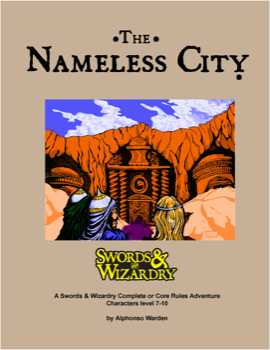
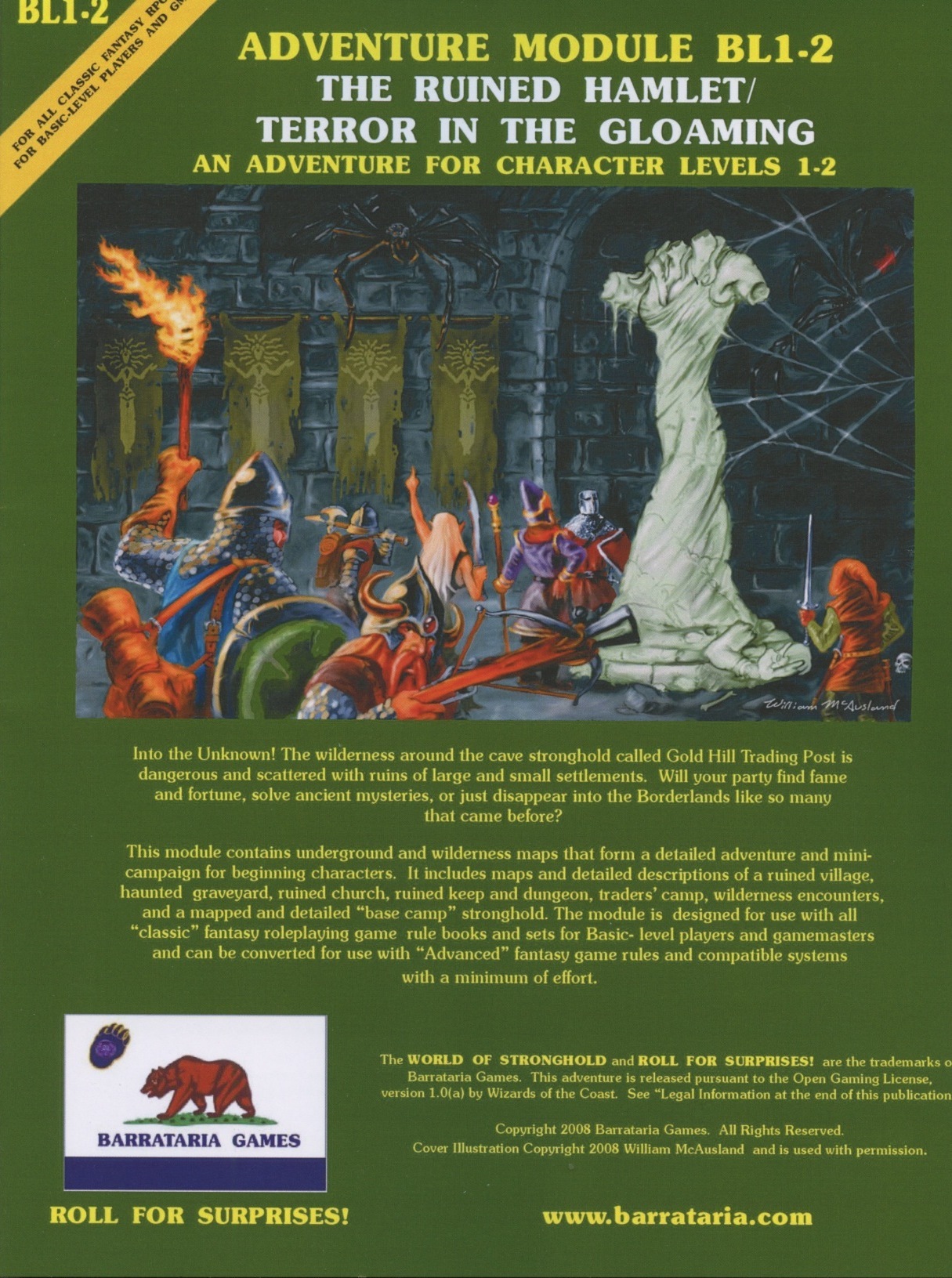
Wheel of Evil

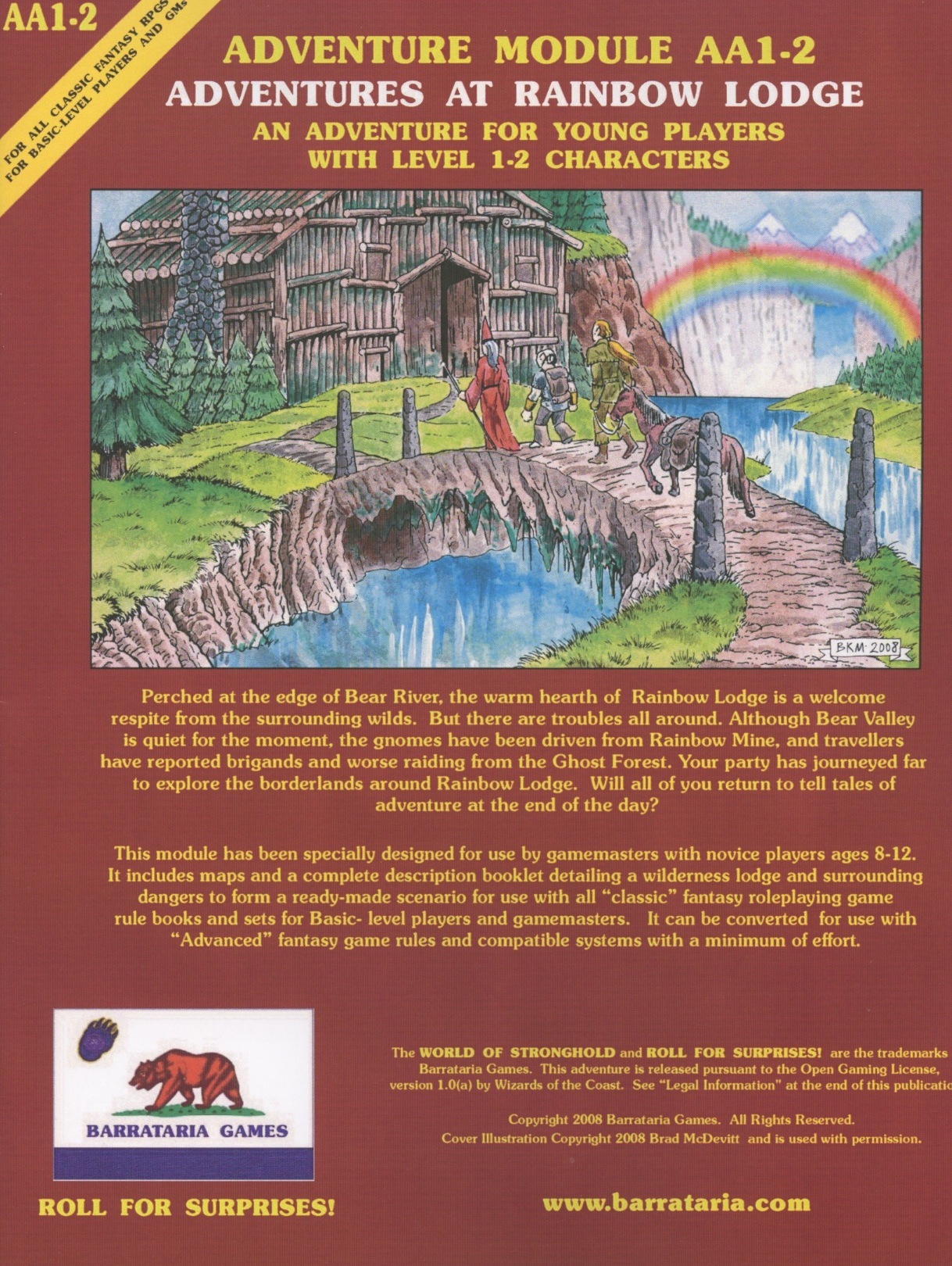
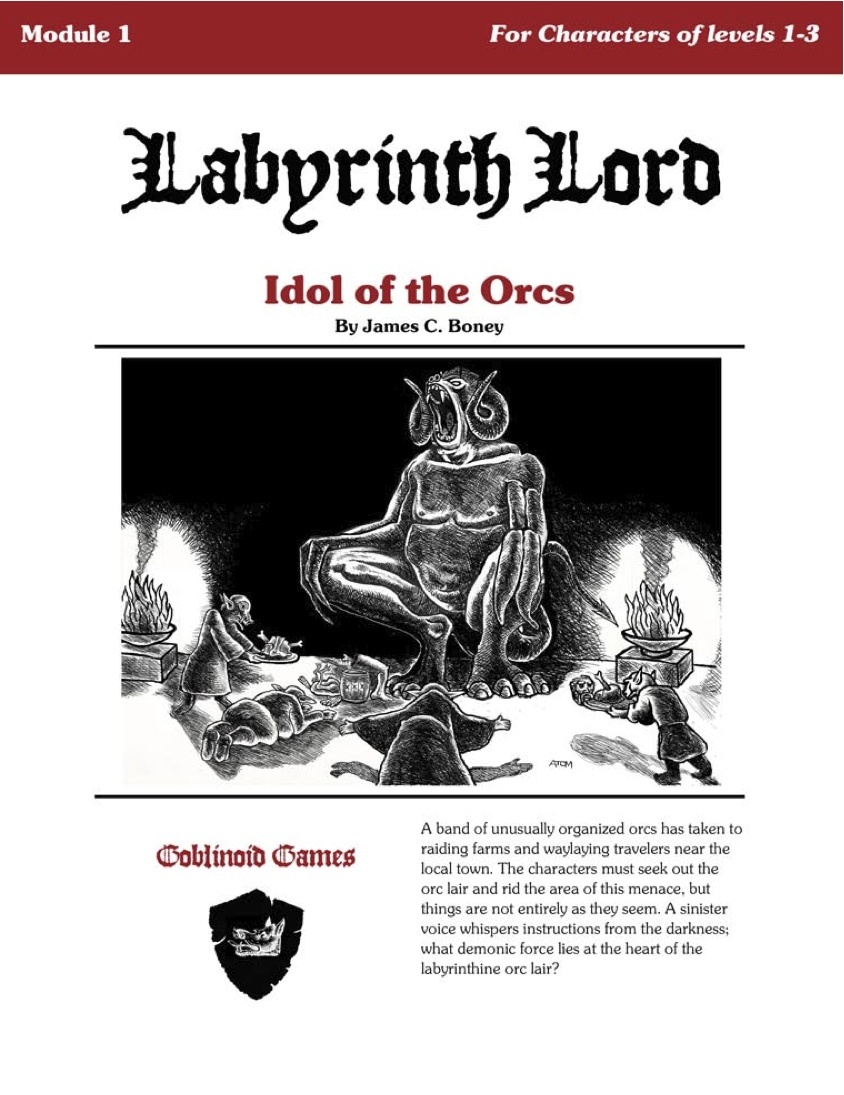
Ok, listen up: Do NOT bail on this review no matter what your first instincts are. I swear to you that this module is awesome. It is about problems that a guild of cheesemakers is having. There, I said it. Still here? Good! I know, I know; “The guild of cheesemakers is having trouble” and “save the cheese in our aging caves” sounds like the worst possible adventure; kind of like the worst dreck out of the d20 era. But the cheese is just the hook, and is a pretty damn good hook also. The adventure is for 4-6 characters of level 3-5.

We have a certain town and surrounding area that makes a good portion of it’s income making cheese. Every year they toil and trouble and then hold a big cheese sale during which they make most of their yearly incomes. Everything rides on their sale, and they have a problem. Now, remember your promise up above to stay with me? Time to test it again: The cave where they age their cheese is having kobold problems.

Ug! There we go again! Kobolds! WTF? Can’t the writers think of something better to use? “Generic humanoid monster/kobold #65423 dies by your shortsword. You get 8 cp and a rusty shortsword.” No! Not this time! I promise! The kobolds here are well done and not just PC fodder because the writer thought he had used too many giant rats. You see, after living for years hidden from the cheesemakers the kobolds now find their food sources infected with deadly mold. Curse you and your Fontina! You will pay! But you see, that’s all backstory. The PC’s only get to deal with a couple of kobold prisoners the town folk have captured. And the one kobold you speaks common does so with a pronounced accent: “Koboldz don’t vant no stinky skveezinks!” and so on. What? A kobold with an accent? And a motivation other than simple mayhem? What’s going on here?!

It turns out that the cheesemakes cave is linked to the kobolds caves, which are deeper in and not described. And both caves are linked to the Evil Ones cave. Ah yes, The Evil One. A creature from before time with alien values, a good touch of amorality, and a lust for dominance. This particular brand of Evil One is a mold/fungi/spore/slime creature from the beginning of time. Hence the tie in with the cheese: he’s trying to taint some of the cheese so that when the towns folk send out their samples, and this BIG wheel of cheese to the Baron, it has the mold masters mind control fungus in it. See! It makes perfect sense! Mold Monster taints human cheese to take over the world. Mold Monster also taints kobolds mushroom farms. Kobolds think humans moldy cheese is the cause. Humans don’t like kobolds destroying their cheese. And everyone lived happily ever … oh no, wait. Everyone has a foul disposition. The towns folks incomes are at risk while the kobolds food supply it at risk. Meanwhile, the Mold Master plots, schemes, and makes more monsters.

This place is CRAWLING with slimes, molds, fungi, ooze, jellies, and other assorted nasties of the ilk. I LOVE it! I’ve always had a soft spot in my heart for the proud & noble Vegapygmi’s from Barrier Peaks. A lot of OSR modules use yellow mold and green slime, so there’s a lot of OSR love for the fungi also. Having a module centered around it is wonderful. All told we get 18 pages, including the 2 map pages in the inside of the front and back covers, and 19 keyed locations in roughly 3 areas of exploration. There are some good tricks/traps, and six new monsters, as well as four player handouts. Background/introductions are kept suitably brief at only 2 pages, which combined with the table of contents and license page means that most of the module is devoted to the keyed locations and the new beasties. The monsters included are suitable unique with nice powers & vulnerabilities. It’s got a possible allied faction, the kobolds, if the party handles things correctly. Remember that cheese sale? I hope the party does. Too much fire/smoke/contamination, or too many rumors getting out and it’s going to ruin the cheese sale, which means less reward for the PC’s, since they are being paid in shares.

I LOVED this adventure! I initially put off reading it because I looked at the front couple of pages, but I was wrong Wrong WRONG. This is a fabulous and well put together adventure. Quite a bit of thought must have in to it on what produces GOOD gameplay, and it shows.

Now, go do a google image search on ‘Slime Molds’ and get ready to run The Wheel of Evil!

This is available on DriveThru.

https://www.drivethrurpg.com/product/78616/Wheel-of-Evil?affiliate_id=1892600

Posted in Level 3, Reviews, The Best | 1 Comment

AA#09 – The Lost Pyramid of Imhotep

This module may be the most well-researched adventure I’ve ever seen. The attention to detail is stunning, as is how the underlying mythology is portrayed in the makeup of the adventure. Imagine for a moment that dungeons were real; created by real people and were a part of the time and place in which they created. This is one of those dungeons. Imagine also that you are a real person who discovers that dungeon; how would you go about about exploring it? Well, that’s how you’re going to have to tackle this one as a player: very very carefully.

First, the basics. This is an adventure for 4-6 characters of levels 4-7. You get 12 pages in this product, with 1/2 page of license, a table of contents page, and a page of background/introductions. That leaves about nine for the keyed encounters, of which there are about nineteen. The map is very linear, essentially a straight line over six levels, with a couple of rooms in a straight line per level. There are tricks & traps and a few encounters, which makes the module most similar to a tournament event product. Players with post-graduate degrees in Ancient Egyptian Funerary Rites will greatly add to the success of the characters.

What we have is a funeral complex for an ancient egyptian architect. As such your characters are literally tomb robbers who will be plundering something akin to one of the great pyramids of Giza. Well, if the Giza builders had access to magic, their gods were real, and they were a little more blunt in displaying their faith and loved physical allegory. You know how at Stonehenge the rising solstice sun is right above some particular stone, or some such? Or how the egyptians buried their dead with objects so they would have them in the afterlife? Let’s think of those two examples and put them in to game terms and then locate them in this adventure; they’d fit right in.

The complex is laid out, I suspect, to mirror the journey of a person through life and their soul through death. As you get deeper in to the complex you get closer and closer to the boat ride to the end and the final destination of your soul. Thus the complex and adventure is a physical manifestation of the mythology of life, death, and the journey of the soul through the afterlife in ancient Egypt. With a light emphasis on “life” an “Death” and a heavy emphasis on the journey of the soul. The information required to pass the tricks, traps, and encounters will almost certainly NOT be in possession of the PLAYERS, unless your group added that PhD guy I suggested earlier. What your players have then is a REAL tomb to rob, just like real people would. Well, like they would if they didn’t just dig a hole to the middle through the bricks like they did in Giza. If _I_ were exploring a tomb I’d bring some books with me, have the phD guy with me or on a cell phone, and hire some guys with guns to go first, which is also the characters best bet if they want to win through. Multiple raiding attempts in order to solve the puzzles correctly, a Sage on call, and plenty of Augury and Contact Other Plane spells. Certainly nothing wrong with that approach; kind of like exploring the Tomb of Horrors over a period of several years. That might be fun in a campaign: put an ‘unbeatable’ dungeon somewhere in it that CLEARLY means certain death, and let the party explore it one room a month, or year, over the life of the campaign, at their own pace. How about some examples?

In one room you meet a statue who asks the party some questions. Note that these are not riddles; the answer can’t be figured out from the question. It’s more like Egyptian trivia. Normally some kind of hint is given prior to arriving at that point, like murals, or mosaics or something. Not in this bad boy. Either you know the answer or you don’t. So kids, the Ibis-headed statue wants to know “What animal must the wise man emulate?” Do you know? There have been no hints thus far in the adventure. You could guess … but … Ok, you may now use your Augury/Contact Other Plane or go back to town and get your PhD on the line. There are multiple rooms that put the characters and players in a similar position.

There are a couple of rooms with magical vehicles in them. I strongly dislike those things. A joystick that looks like a pyramid with three gemstones: one to start the flying machine, and a couple more to shoot it’s guns. You then get to have a magical dogfight with three other machines. If you win, the door out opens. (Which is a repeated theme; the door out of a room doesn’t open until you: answer the riddle, or kill the last snake, or some such.) There’s another room later on with the same such in it. Which reminds me, there’s a hallway that, when you enter it all of your breathe is sucked out of you: save vs. spells at -1 or die for every round you are in the corridor. No warning at all. Hope you sent your lackey first …

I shouldn’t forget the mono-molecular bread kitchen. There’s also a couple of nicely evocative images near the end that I won’t ruin, but it should completely freak out the players and awe them. The characters reward for making it to the end? Eternal life. Nice!

This reminds me of Tomb of Horrors, but requiring significantly more meta information about the culture of ancient Egypt. I understand that Robilar defeated the Tomb through the “use” of his orc lackeys. They would help here also. There’s no way this adventure can be handled by a group of 4th level characters in a single session. Augury only gives you a yes or no and Contact Other Plane is a 5th level spell. That’s the only way anyone is getting through room 2 unless you allow google at the table. If, however, I place this as “the unbeatable tomb” and allow/expect multiple forays in to it over several months of campaign play, then I can see it easily working and being a very nice goal for the players and their characters to achieve.

This is available on DriveThru

https://www.drivethrurpg.com/product/60551/Advanced-Adventures-9-The-Lost-Pyramid-of-Imhoptep?affiliate_id=1892600

Posted in Reviews | Leave a comment

SF1 – It Started with a Chicken …

This adventure is the first in the Splinters of Faith adventure path. There are ten linked adventures that should take characters from first level to fourteenth or so, although they also appear to be easily adaptable to drop in as singular adventures in any game world. This first adventure is for a group characters from first to third level. The publication is fairly brief, at 17 pages or so, with type large enough to be easily read by my aging eyes.

The first eight pages or so are devoted to the background and history of the adventure path, along with the table of contents and rights pages. The background is fairly standard fare: Evil High Priest tries to take over world, forces of good “defeat” him, a tomb is built and eventually forgotten about. I’ve read through a lot of these introductions/backgrounds and this is one of the better ones from a readability standpoint. It also includes a nice description of a non-standard magic item, which would be termed an artifact if it were compared to those entries in the 1E DMG. I happen to like this sort thing; non-standard magic items make life more interesting for the characters and provide quite a bit more atmosphere for a campaign.

A small village of dirt farmers is provided very briefly. Essentially we get a brief description of the tavern and a little more for the temple, with a very brief overview of the other dwellings in town. There’s not much to the village and not much description provided so this is NOT a ‘home base’ ala Homlet or Against the Cult of the Reptile God; at least not without quite a bit of additional work by the DM. The adventure hook did stand out though, as did the two if the NPC’s up at the temple, which I found very nice & evocative. Think of a tavern in a dying agriculture community with a bunch of farmers sitting around complaining about the village gossip, including their chickens going missing. The reward offered is a bag of potatoes and a jar of pickled eggs. Nice! The village priest and his wards are likewise given brief descriptions, just enough to bring the encounters with them life but not so much as it’s a slog to wade through. Overall we get about 2.5 pages of village description.

There’s a brief encounter outside of the dungeon and then 15 or so keyed encounters inside the tomb. The tomb map is well done but it is certainly not a complex looping map. The undead inside the tomb, and the environs they live in, are very nicely done and leads to a very sinister feel to the tomb. The only strangeness I found was that the undead have not exited the tomb yet, but one can always say their source of power is the tomb itself. There’s about 4.5 pages of dungeon description.

This is a small adventure but much much better than many of the larger ones I have read. The farmers in the tavern got my imagination going, as did the NPC’s at the temple. Combined with the encounter outside the tomb and the undead in the tomb it produces a nicely evocative adventure that does not feel forced at all. Those small attentions to detail really catapult the adventure in my upper tier. I have no qualms with recommending this adventure.

This is available at DriveThru.

https://www.drivethrurpg.com/product/85080/Splinters-of-Faith-1-Swords-and-Wizardry-Edition?affiliate_id=1892600

Posted in Reviews | 1 Comment

Designers & Dragons

While perusing the Mongoose booth at GenCon I came upon a large black hardcover book, Designers & Dragons. This is a huge 438 page hardback book that covers the history of the RPG industry. That’s a tall order however the book certainly succeeds. It’s a very readable history of the various companies and trends in the RPG industry from it’s proto-history to the present day. It covers the history of roughly 50 companies in a major way and has 1/2 to full page histories of quite a few more. The author points out that he is trying to cover the major movers & shakers, either by size or by innovation, and he doesn’t try to cover all of the publishers who released one or two books and then disappeared … unless they had a major impact on the industry.
The book is broken down in to seven sections, roughly based on the various trends in the industry. Part 1, at 30 pages or so, covers TSR and the beginnings of the industry. We get all the details of the creation story, the various major staffing and policy changes, and the political issues inside, and how TSR weathered the various storms throughout it’s history. Major products and releases for each company are covered, as is some mention of supplements, however the book is not a catalog of the individual publications. Staff move around and jump from company to company while the companies themselves merge, buy each other, and then break apart again.
That basic formula is followed through the other six sections of the book: first wave, second wave, third wave, the CCG years, the D20 years, and the Indie revolution. Interspersed throughout the histories are sidebar mini-histories of related game companies and breakouts on other interesting areas. TSR & WOTZ get about 30 pages each, while Yaquinto gets about 2 pages, and mini-histories might get a half page to a page. Some of the interesting breakouts cover the history of RPG fiction, the publication history of Blackmoor , Greyhawk, the Wilderlands, and Kalibruhn, and the role of computer games and the internet on the publishers.
How the companies used their magazines as house organs or as general product was something I found very interesting. In addition, the issues related with the Canadian & English publishers was very interesting as well. This just came up again recently when I saw a video of an English gentleman railing on D&D and extolling the virtues of Runequest. This book covers the reasons why Runequest, and a few other games, are more popular in the UK than in the US.
I can’t recommend this history enough. It’s a fabulous read and has absolutely consumed my time for the last week. The author promises more to come at http://www.rpg.net/columns/designers-an … ons1.phtml. It appears that my copy is a pre-relase for GenCon, and the general printing is still to come.
It’s available as a bundle on DriveThru.
Here’s a list of the major sections:
Part 1 – TSR
Part 2 First Wave
FBI
Games Workshop
GDW
Judges Guild
Fantasy Games Unlimited
Metagaming Concepts
Chaosium
P3 – Second Wave
SPI
Steve Jackson Games
Task Force Games
FASA
Gamelords
ICE
HERO
Palladium
Yaquinto
Mayfair
Bard
Avalon Hill
Columbia
West End
Pacesetter
P4 Third Wave
Skyrealms Publishing
Digist Group Publications
R Talsorian
White Wolf
Lion Rampant
New Infinities
Creations Unlimited
Pagan Publishing
Atlas Games
AEG
Phage Pree
Dream Pod 9
P5 – CCG Years
WOTC
Hogshead
Kenzer & Co
Last Unicorn
Grey Ghost
Holistic Design
Pinnacle Entertainment
Imperium
Guardians of Order
Eden
FFG
Margaret Weis
Green Knight
Issaries
P6 D20 Years
Necromancer
Green ROnin
Troll Lord
Pelgrane
Goodman
Privateer
Mongoose
Adept
Paizo
P7 – Indi Revolution?
Evil Hat
Cubicle 7
Catalyst
Mini-histories & Breakouts
Wee Warriors
D&D&Computers
Greyhawk
Adventure Games
Worlds of Warhammer
EDU-Wares Space Games
Settings – Wilderlands
Different Worlds Magazine
Different Worlds Publications
Impressions Advertising
STrategy & Tactics Magazine
Fiction of Starfire
Amarillo Design Bureau
Great Licenses – SF
Little Soldier Games
Phoenix Games
Great License – Fantasy
Comics
Morrigan Press
Avalon Hill COmputer Games
Kelestia Productions
Eon Products
54 40 Orphyte
Fiery Dragon
Jefferson Swycaffer & the Rise of RPG Fiction
Settings – Kalibruhn
Eos Press
Arc Dream Publishing
Daedalus Entertainment
Ars Magica Fanzines
Crafty Games
Nightfall Games
D20 Firsts
Netbooks
Decipher
Glorantha Fanzines
Moon Design
Retroclones
Ronin Arts
Hekaforge Productions
Settings – Blackmoor
Storytelling Games
Fantasy Heartbreakers
Indies of Note
Otherworld Creations
Fred Hicks – Marketeer
One Bad Egg
Posted in Reviews | Leave a comment

Designers & Dragons

While perusing the Mongoose booth at GenCon I came upon a large black hardcover book, Designers & Dragons. This is a huge 438 page hardback book that covers the history of the RPG industry. That’s a tall order however the book certainly succeeds. It’s a very readable history of the various companies and trends in the RPG industry from it’s proto-history to the present day. It covers the history of roughly 50 companies in a major way and has 1/2 to full page histories of quite a few more. The author points out that he is trying to cover the major movers & shakers, either by size or by innovation, and he doesn’t try to cover all of the publishers who released one or two books and then disappeared … unless they had a major impact on the industry.The book is broken down in to seven sections, roughly based on the various trends in the industry. Part 1, at 30 pages or so, covers TSR and the beginnings of the industry. We get all the details of the creation story, the various major staffing and policy changes, and the political issues inside, and how TSR weathered the various storms throughout it’s history. Major products and releases for each company are covered, as is some mention of supplements, however the book is not a catalog of the individual publications. Staff move around and jump from company to company while the companies themselves merge, buy each other, and then break apart again.

That basic formula is followed through the other six sections of the book: first wave, second wave, third wave, the CCG years, the D20 years, and the Indie revolution. Interspersed throughout the histories are sidebar mini-histories of related game companies and breakouts on other interesting areas. TSR & WOTZ get about 30 pages each, while Yaquinto gets about 2 pages, and mini-histories might get a half page to a page. Some of the interesting breakouts cover the history of RPG fiction, the publication history of Blackmoor , Greyhawk, the Wilderlands, and Kalibruhn, and the role of computer games and the internet on the publishers.

How the companies used their magazines as house organs or as general product was something I found very interesting. In addition, the issues related with the Canadian & English publishers was very interesting as well. This just came up again recently when I saw a video of an English gentleman railing on D&D and extolling the virtues of Runequest. This book covers the reasons why Runequest, and a few other games, are more popular in the UK than in the US.

I can’t recommend this history enough. It’s a fabulous read and has absolutely consumed my time for the last week. The author promises more to come at http://www.rpg.net/columns/designers-an … ons1.phtml. It appears that my copy is a pre-relase for GenCon, and the general printing is still to come.

This is available as a bundle on DriveThru.

https://www.drivethrurpg.com/product/141205/Designers–Dragons-The-Complete-Set-BUNDLE?affiliate_id=1892600

Here’s a list of the major sections:

Part 1 – TSR

Part 2 First Wave
FBI
Games Workshop
GDW
Judges Guild
Fantasy Games Unlimited
Metagaming Concepts
Chaosium

P3 – Second Wave
SPI
Steve Jackson Games
Task Force Games
FASA
Gamelords
ICE
HERO
Palladium
Yaquinto
Mayfair
Bard
Avalon Hill
Columbia
West End
Pacesetter

P4 Third Wave
Skyrealms Publishing
Digist Group Publications
R Talsorian
White Wolf
Lion Rampant
New Infinities
Creations Unlimited
Pagan Publishing
Atlas Games
AEG
Phage Pree
Dream Pod 9

P5 – CCG Years
WOTC
Hogshead
Kenzer & Co
Last Unicorn
Grey Ghost
Holistic Design
Pinnacle Entertainment
Imperium
Guardians of Order
Eden
FFG
Margaret Weis
Green Knight
Issaries

P6 D20 Years
Necromancer
Green ROnin
Troll Lord
Pelgrane
Goodman
Privateer
Mongoose
Adept
Paizo

P7 – Indi Revolution?
Evil Hat
Cubicle 7
Catalyst

Mini-histories & Breakouts
Wee Warriors
D&D&Computers
Greyhawk
Adventure Games
Worlds of Warhammer
EDU-Wares Space Games
Settings – Wilderlands
Different Worlds Magazine
Different Worlds Publications
Impressions Advertising
STrategy & Tactics Magazine
Fiction of Starfire
Amarillo Design Bureau
Great Licenses – SF
Little Soldier Games
Phoenix Games
Great License – Fantasy
Comics
Morrigan Press
Avalon Hill COmputer Games
Kelestia Productions
Eon Products
54 40 Orphyte
Fiery Dragon
Jefferson Swycaffer & the Rise of RPG Fiction
Settings – Kalibruhn
Eos Press
Arc Dream Publishing
Daedalus Entertainment
Ars Magica Fanzines
Crafty Games
Nightfall Games
D20 Firsts
Netbooks
Decipher
Glorantha Fanzines
Moon Design
Retroclones
Ronin Arts
Hekaforge Productions
Settings – Blackmoor
Storytelling Games
Fantasy Heartbreakers
Indies of Note
Otherworld Creations
Fred Hicks – Marketeer
One Bad Egg

Posted in Reviews | Leave a comment

AA#19 – Secret of the Callair Hills

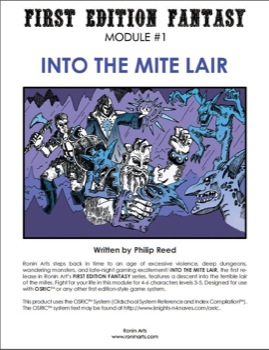
The Secret of the Callair Hills is a small 12 page adventure for the OSRIC system. This is a stand-alone adventure for 4-6 characters of levels 3-5. It should be fairly simple to drop this in to any standard fantasy world. The major opponents are undead and some vermin, with a few wild animals and bandits thrown in on the Wandering Monsters table. Goblins and Ogres also show up in the wandering table. While this is certainly personal preference, I like the creature allotment; it mostly makes sense to me. Undead, animals, vermin and humans are what I like to see liberally scattered about. The humanoids only show up on the wandering table so I can excuse their presence. We get one new monster in the back; a half page description of a level 5 Barrow Lord undead beastie. Again, this is a good thing: bad guys should be new & unique to add a good deal of mystery to the game. There’s no easier way to freak out a PC then drop in a new creature without unknown attacks & vulnerabilities.

Twelve pages isn’t a lot. An ad and the license take up two pages in the back and one more is taken up with the table of contents. Another is burned by the maps, leaving us eight pages, the same size as TSR G1/Steading of the Hill Giant Chief. Quite a challenge. We first get about a half page of history and background on the situation. I appreciate this brevity; I don’t need a five page history of what our bad guy had for breakfast and the twelve empires that rose & fell prior to the PC’s showing up. And as for that bad guy and history …

It immediately put me on guard. I don’t need social conscious shoved down my throat during my fantasy RPG. Recycler orcs, evil zookeepers and noble savages belong in Sophie’s Choice the RPG, not my fantasy RPG. I must now eat my words since this time it does fit nicely in to the plot. You see we are faced with a group analogous to the American Indians. Noble savages who do great things until the evil settlers show up and desecrate their burial grounds with agriculture. Our noble savages are wiped out when they protest. See? My knee-jerk is an eye-roll. A thousand years later new settlers show up on the abandoned land and start farming. Eventually they start to show up murdered in their farms. Nothing is taken and nothing is pillaged. We’re given about a half-page of information on getting the PC’s involved; a couple of hooks and a sample murder-cabin/farm.

The adventure proper is then launched in to. It works out to be a wilderness with scattered farms (working, abandoned, and murdered) with abandoned towers and burial mounds/barrows. There’s a simple abandoned fort and the evil bad guys barrow as well. The PC’s will spend their time crawling over the wilderness poking in to these objects. The core wilderness is about 23 miles wide, with the ‘barrowfields’ being about 12 miles wide. The wandering table is a little sparse in my opinion for this size of table, especially when wanderers are checked for every hour during the day (1 on a d6) and every hour during the night (1 on a d8.) Nighttime encounters will only be with lesser barrow spirits, of which there are a limited number. My opinions here may be flawed, which may come out in actual play.

Eventually the players will stumble on the main barrow and confront the ancient hero who still guards his land. If the PC’s have been respectful of the other barrows, and can speak his language (the mage DID memorize a comprehend languages spell, didn’t they? It’s OSR so they should have … ) then our Barrow Lord can be convinced that he is mistaken in his murderous quest and things can end peacefully. In all likelihood though the PC’s didn’t realize they were dealing with wronged noble savages and looted the tombs, which is just gonna piss off our Barrow Lord and force him to attack in a blind rage. Oh well, that’s what they make longswords & oil for!

I can’t decide about this product. On a very superficial level it’s a pretty bland wilderness adventure with a bad guy in a small lair at the end. But then again, the bag guy isn’t actually bad, he’s just misunderstood. That, along with a realistic (and brief) portrayal of barrows, is interesting. Then again, by ‘misunderstood’ I actually mean ‘running around murdering innocent farmers’ and I’m playing an RPG, not performing a historical LARP. It may be interesting however to insert some of the barrows from the MERP supplement ‘Bree & the Barrow Downs’ in to this to provide some more flavor & color.

This is available on DriveThru.
https://www.drivethrurpg.com/product/92769/Advanced-Adventures-19-The-Secret-of-the-Callair-Hills?affiliate_id=1892600

Posted in Reviews | Leave a comment

SF2 – Burning Desires

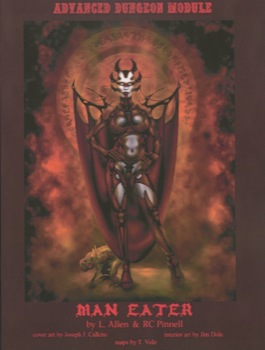
This is the second adventure in the Splinters of Faith adventure path and is for a group of characters from 2-4 level. The overall quest is restore an object known as the Scepter of Faiths. Each step along the way the party visits the temple of different faith with adventure associated with it, and I assume there will be a couple of more at the end during the which the big bad wolf/Evil High Priest is confronted. The temple portion is associated with the adventure path however the associated adventure it independent of the the adventure path, allowing it to be dropped in as a one-shot.

The module is about 20 pages long and is designed for a party of 2-4th level characters. There’s a license and add in the page, which long with the credits and table of contents eat up five pages. That leaves us five pages for the description of the temple compound, 2.5 for the wilderness description and background, and six pages of keyed encounters.

What we have is a dwarven temple compound. It’s a circular fortress temple, and, being dwarves, they have a mystic forge. The forge is supposed to have four mystical magic items, one for each element, however two are missing. One has been missing for a very long time and one has just recently gone missing. The second one is instrumental for the adventure path, and is the basis for the wilderness adventure that composes the second half of the module. The temple is clearly well laid out, from the map design, however the temple is rather blandly described. The theft of the mystic flame, the second item, involves a couple of clues in the temple, but again, it’s a little tenuous and a little bland. Fortunately, this turns around in the wilderness adventure.

The second half is a journey through a swamp to find the thief and the mystic flame. The swamp calls for a wandering monster check every three hours. a d20 is rolled and a result of 1-13 indicates an encounter, with about three of those being rather benign. The party will cover about one swamp hex an hour on rafts, so about every three hexes there will be a wanderer roll, with abut 50-50 chance of encountering monsters. The swamp is also rather large, covering a full map page, meaning the party will spend a lot of time in the swamp and hit lots of wanderers. The map is sprinkled with encounters, some brief and some more in-depth. Notably, a keyed encounter is missing from the map, Giant Frogs, which is the only serious error. Also, notably, is that about of the dry land islands in the swamp are populated with crocodiles. 8 crocs on each of them. Each croc is 3 HD. Ouch! I hope the party knows when run! I don’t really have a problem with overpowering encounters, especially in OSR modules, in fact it’s probably a plus.

There are two areas detailed in a bit more depth. One is a sunken temple complex with some undead in it. It’s briefly described, but with a little GM imagination it could prove a creepy place to explore, even though it only has six or so rooms. The second are the mud-tunnels of the giant crayfish, where our evil bad guy is hanging out. I have to say, this fires my imagination. The encounters are not really evocative in either place, but the description are: “sunken temple” and “mud tunnels of the giant crayfish” are both great encounter descriptions.

This is a solid adventure, and the journey through the swamp is nice. With a little GM work to fire some additional details in the encounters then it could be upgraded to a great & memorable adventure.

This is available on DriveThru.
https://www.drivethrurpg.com/product/85082/Splinters-of-Faith-2-Swords-and-Wizardry-Edition?affiliate_id=1892600

Posted in Reviews | Leave a comment

Q2 – Eruptor’s Vengeance

Q2 Eruptor’s Vengeance is the second in the Pacesetter Games Quick-Play series. These series of modules are meant to be played in a single session or two. This particular adventure is for a group of characters from levels 2-4. This particular module has 14 pages, plus two more usable pages from the insides of the module cover. We cover contains a map of the cave system on one page and the stats for the various monsters on the second page. There’s a page of ads, one for the license, another that cover the table of contents and credits, another that has a page of 7 pre-gens, and finally one that contains a write-up of two new monsters. That leaves us nine pages for the core of the module, one of which is background information and another of which is the pre-cave encounter. That leaves us five pages for the 8 keyed encounters.

The adventure is a simple one that is chock full of possibilities: a dragon just died. The party, drawn by the smell of death in the air, stumbles upon the scene of a great battle in the wilderness. A dragon lies dead surrounded by the bodies of the group that killed it, and it looks like it JUST happened. Like any good vultures the characters will certainly search the bodies and find there a map to a dragons lair. The very dragon that lies dead in front of them. At this point every PC’s eyes should be glazed over with GREED. An unguarded dragon hoard … their for the taking. The two new creatures include a Dropper, a pointed stone-like creature which waits it’s entire life on a ceiling to drop on something walking underneath. Finally there is a Drake, a shape-changing reptilian creature that comes in different colors.

While there are only eight keyed encounters they are very well done and imaginative. If I take the definition liberally then there are seven or eight tricks/traps, including an interesting betrayal that I found particularly evocative. For it’s size this is a rather interesting little crawl, thanks in large part to the traps & tricks that generally do double duty in rooms. A room may have a ‘normal’ encounter and then it also has the trick/trap also, which usually doesn’t happen during the core encounter. You don’t need to be worried about the hoard unbalancing the campaign; there’s a good explanation for the reduced amount.

This is a great little adventure full of OSR spirit. A good premise, tricks, traps, factions, the module would have it all if the map was more complex, but then it wouldn’t be a quick-play module, would it? I have no qualms recommending this.
Let me tack on this: What if you, the DM, respec’d this to be for a group of 1st level characters and placed the most awesome dragon hoard ever? One that makes Smaugs look like a kobold purse? At LEAST four of every magic item in the 1E DMG, and several artifacts to boot. Of course, as the dwarves learned, news of a dragons demise spreads rapidly, and every wannabe demi-god and demon-prince is going to hunt the PC’s to find out where the hoard is … You’ve got riches & items beyond the dreams of avarice, but can you keep them? Now THAT’s a campaign!

Posted in Reviews | Leave a comment

FGG3 – Ursined, Sealed, Delivered

This is a 32 page module set in the frozen north, for 4-6 characters of levels 3-5. It has 2 full page ads and a license page, and 4 pages of table of contents, credits, and forward. Finally we have 12 monsters stated out on 2 pages in the back (most of which are new), 4 pages of maps, and 3 on wilderness survival. That leaves us 16 pages to handle the roughly 56 keyed encounters. The original product was a tournament module, and it shows a bit, although not nearly as much as in Ghost Tower or Hidden Shrine. You do get tournament scoring rules, but this is much less of a ‘linear & forced tournament format’ then any other tourney module that I’ve seen.While traveling by boat in the frozen north the characters come across a talking seal who begs their help in three tasks, presumably located nearby. The characters have some equipment unloaded from the ship to the beach, and the adventure begins! First, the PCs are playing the frozen north, which is where those 3 pages of survival rules come in, as well as the unloaded supplies. There are rules for encumbrance, dehydration, starvation, exposure, and travel. The unloaded supplies are on pallets and the characters are given no more than 5 minutes to select the specific gear pallets to unload from the boat. The pallet selection and their contents really lend to the atmosphere of exploring in the frozen north. It’s pretty basic and simple rules that add a lot to the scenario, which is exactly what this sort of thing is supposed to do.There are three major areas to explore, the furthest two of which are about 5 days apart. Spread out between these areas are some environmental encounters (penguins, sea lions, crevices, etc) and a nice wandering monster table which contains at least three encounters that will overwhelm the party. This is a good test for OSR players: killing the monsters, especially wanderers, is usually NOT a smart idea. You want the treasure, not the kill. :)

The three encounter areas break down in a small fort with NPC’s in it to interact with, a mysterious tower full of undead, and an ice cave full of environmental & vermin encounters. Most of the tricks/traps come from dealing with the environment: cold streams, crevices, ice climbing, drifting snow, and so on. The three major areas themselves are rather small but sufficiently interesting in their encounters, especially with a little GM descriptive imagination in the undead tower, to make the three sites, connected as they are, interesting to adventure in. There are a couple of interesting magic items that are not of the “+1 dagger” variety, which I always appreciate. These, along with the new monsters, are really what set a module above the rest; they show a willingness to create new & unique content with which to use to freak your players out.

This would make an excellent one-shot or a couple of game nights if you can get the PC’s up in the north. The locale is sufficiently different to be interesting to a wide group of players and offers them challenges they would not normally encounter in the temperate dungeons or tropical snake-people temples they usually adventure in.

This is available on DriveThru

https://www.drivethrurpg.com/product/86964/Ursined-Sealed-and-Delivered–Swords-and-Wizardry-Edition?affiliate_id=1892600

Posted in Reviews | Leave a comment

Q1 – The Screaming Temple

Q1 The Screaming Templa is the first in the Quick Play series from Pacesetter Games & Simulations. The Quick Play modules are meant to be played in a single gaming session, or at most two, and thus are short & sweet. This particular module has 14 pages, of which about 4.5 describe the 10 keyed locations. There’s a pages of preg-gens, a page for license, a page for the credits and table of contents, one for the new monsters, and about 2.5 of introductions & background. The module cover has a map on one page and a list of the monster stats on the other page. The adventure is written for characters level 2-4, with 6-10 total party levels.

One night a large warehouse burns down in the city slums. A short while later a temple appears overnight on the same spot. No one ever enters or leaves, and on some nights mysterious screaming is heard coming from the temple. A few months later the PCs roll in to town and presumably investigate after hearing some rumors. Yes, there’s a rumor table, which is always appreciated and almost a necessity for an OSR module.

You’re not going to play this are you? If so you should stop reading now.

It turns out that the temple was constructed on another site and then reassembled by a large force of laborers on this site in one night. It’s lightly constructed to appear like stone but is actually made of wood & plaster. The entire place is the front for a fence, who’s wizard buddy flies in on a screaming large bat, the sole new monster, every week or so to pick up the next load of goods. They’ve been paying off the town officials to avoid official investigations. The modules set up is interesting, as if the construction material; I look forward to guards punching/stabbing through the plaster walls to get at PCs who think they are safe, kind like that scene in Bladerunner. The Doomsday device is also interesting and should provide some issues for the PCs. There do seem to be some logic problems though. The fence draws a lot of attention to himself by hiding out in the mysterious temple built overnight. It’s essentially just his house, so why not just use a warehouse? In addition, no one in the scared local neighborhood saw or heard the large gang constructing the temple temple that one fateful evening?

The module starts nice however I ‘feel’ like it dies out a bit on imagination front after that, even though this is clearly not the case. The Wizard Riding a Giant Screaming Bat should provide some interesting moments, as should the Doomsday device. These two encounters, combined with the nice premise and the ‘single session’ nature of the module should provide a nice short self contained adventure the next time your’s PCs enter a large city.

This is available on DriveThru.
https://www.drivethrurpg.com/product/263912/Q14-The-Screaming-Temple-and-other-Deaths?affiliate_id=1892600

Posted in Reviews | Leave a comment